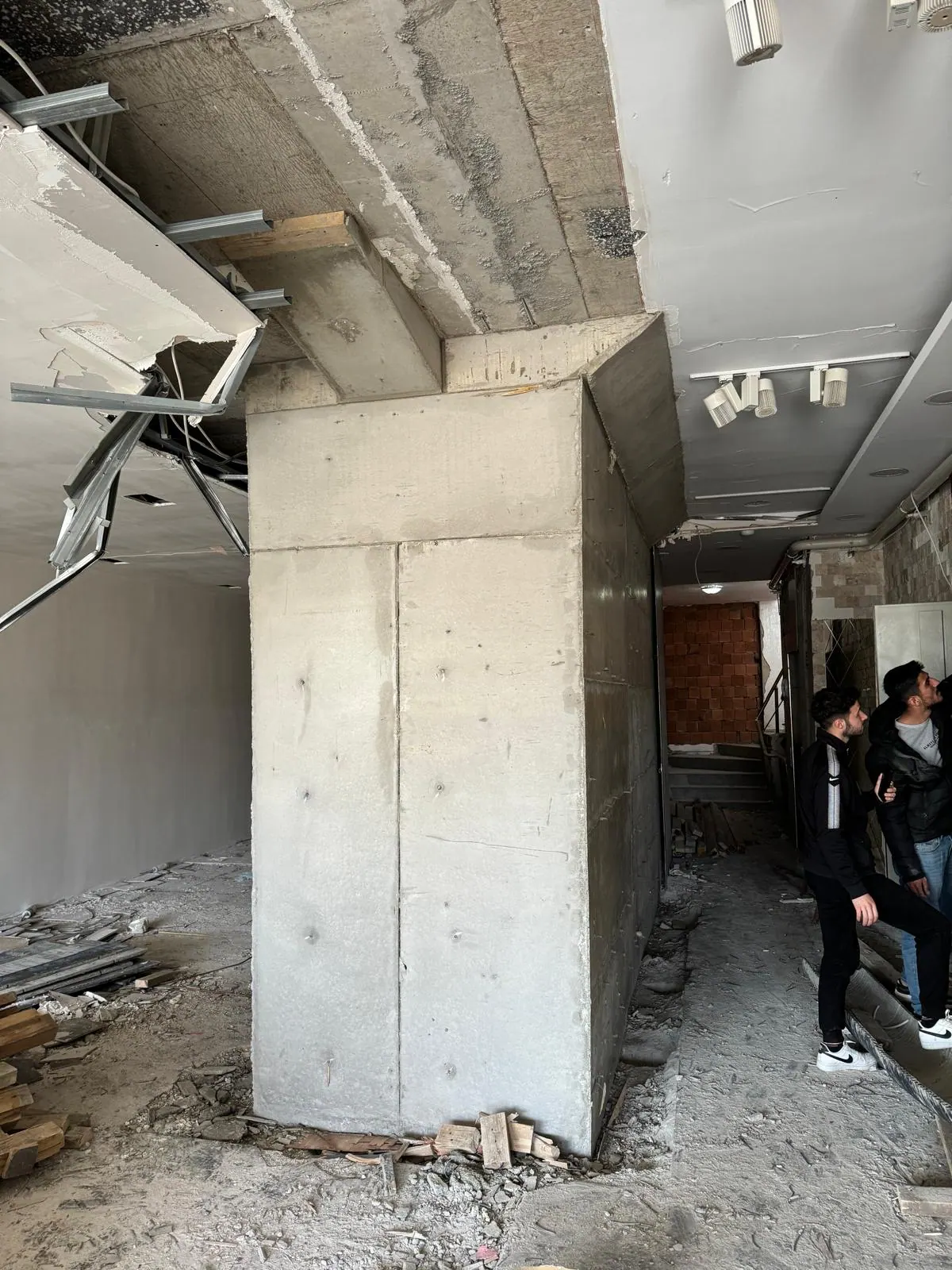
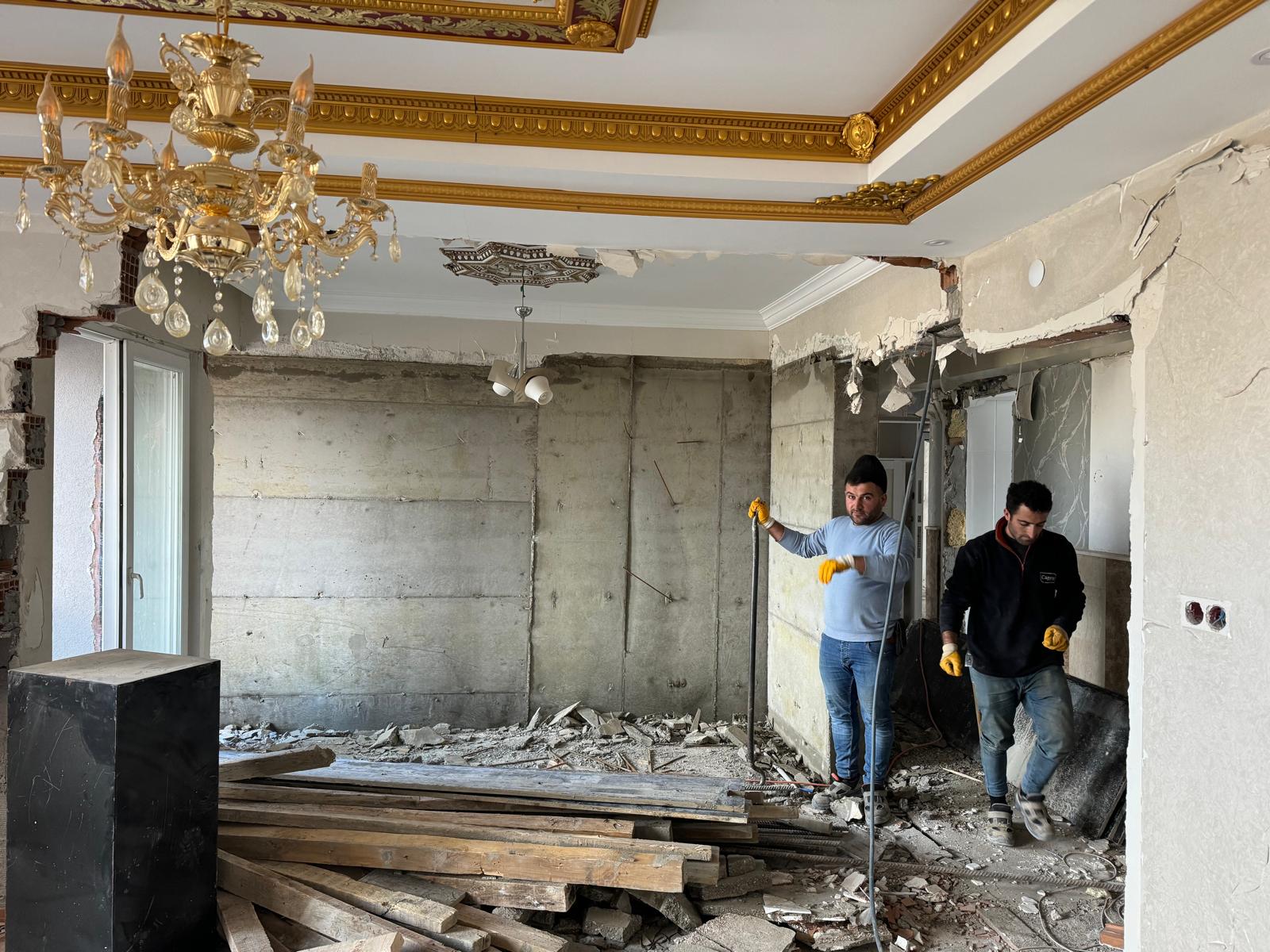
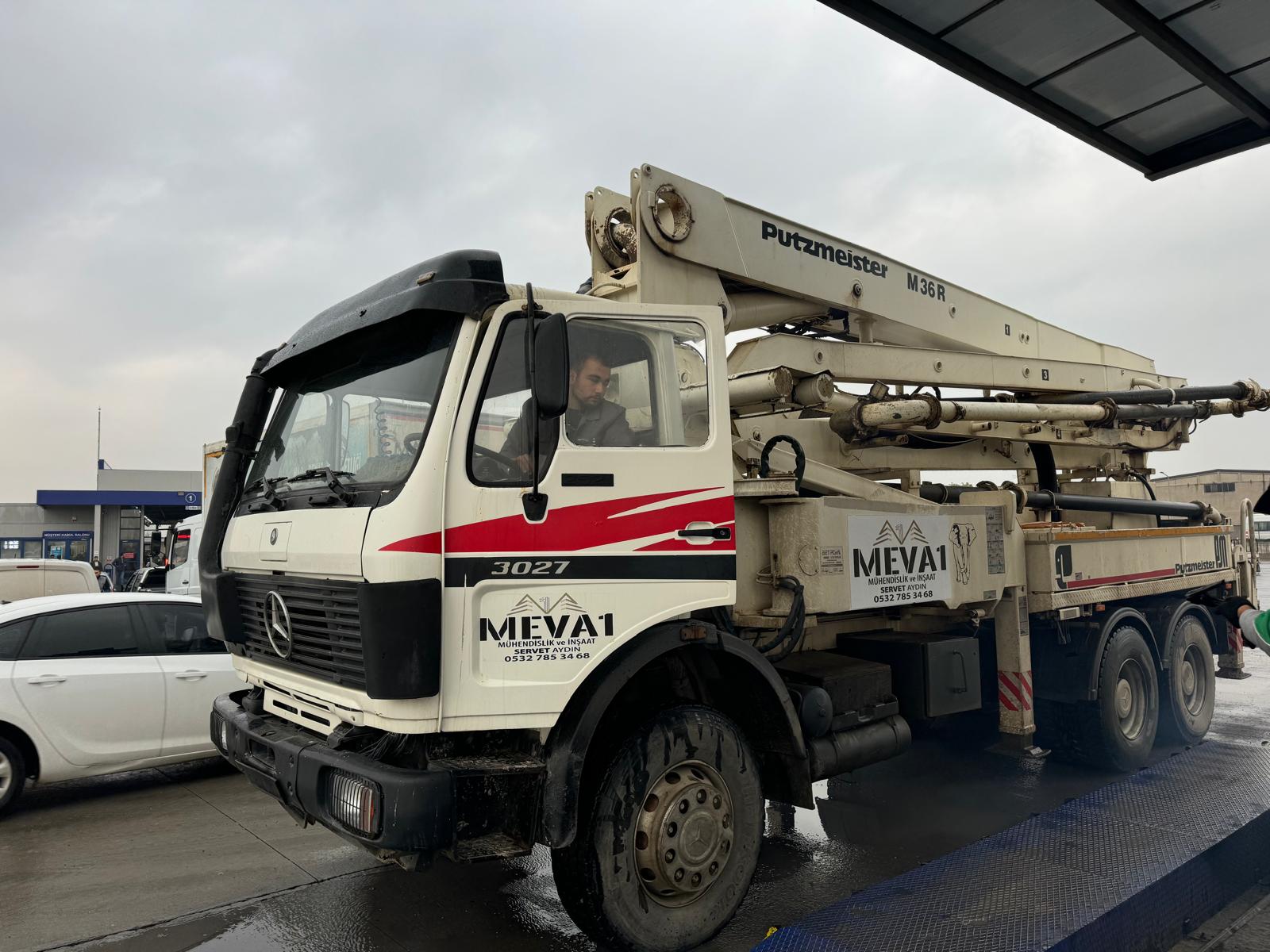
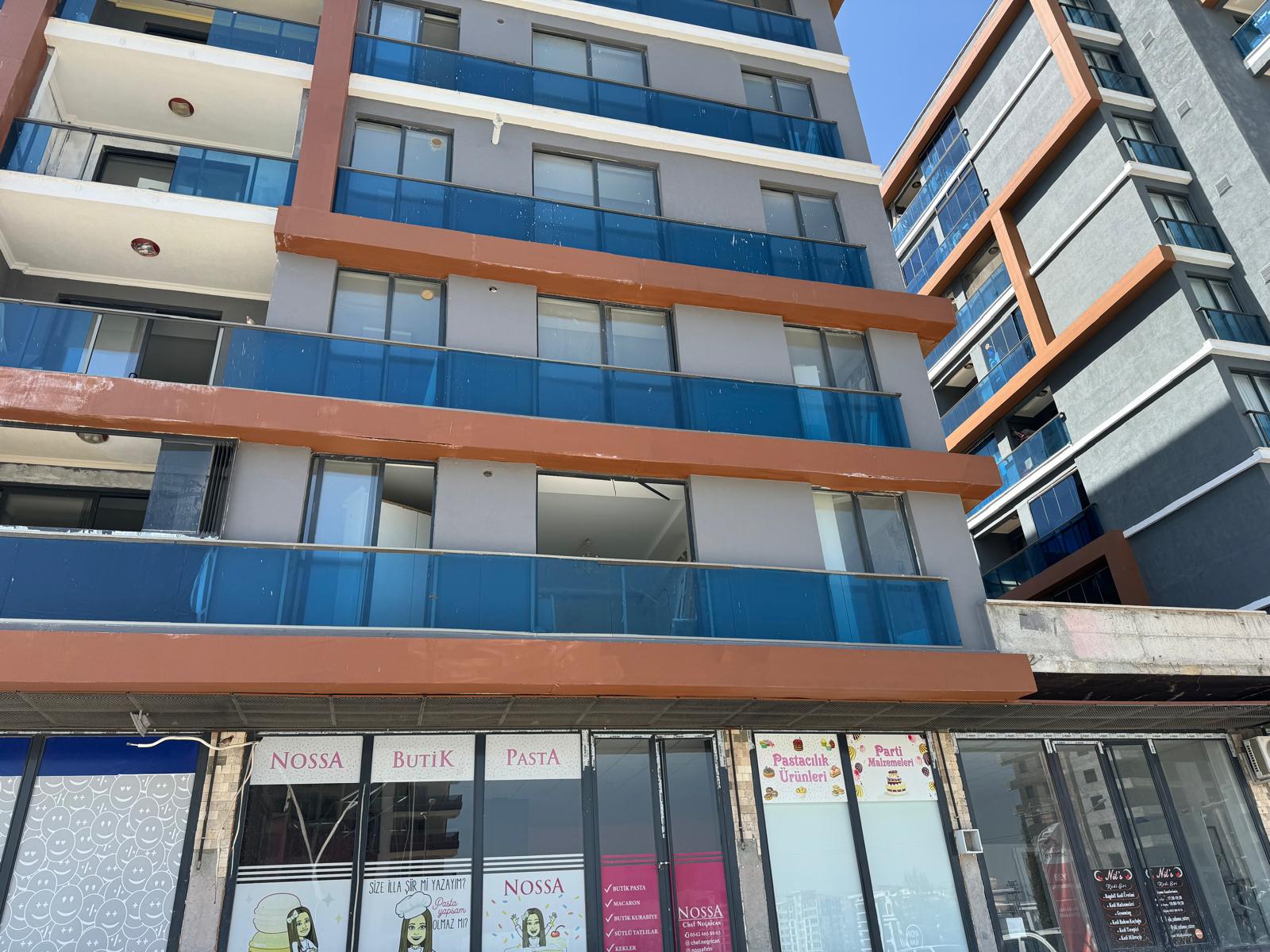
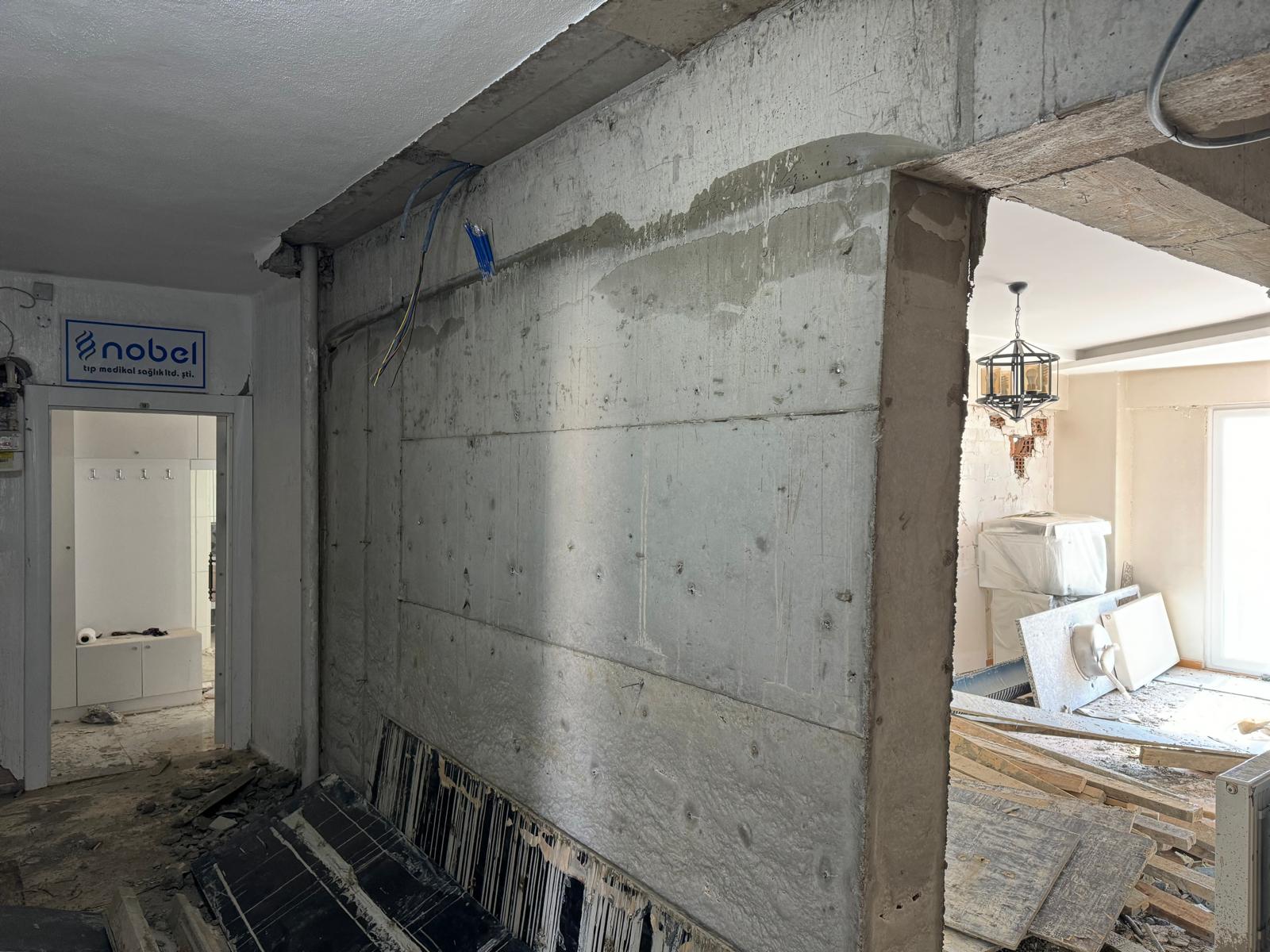
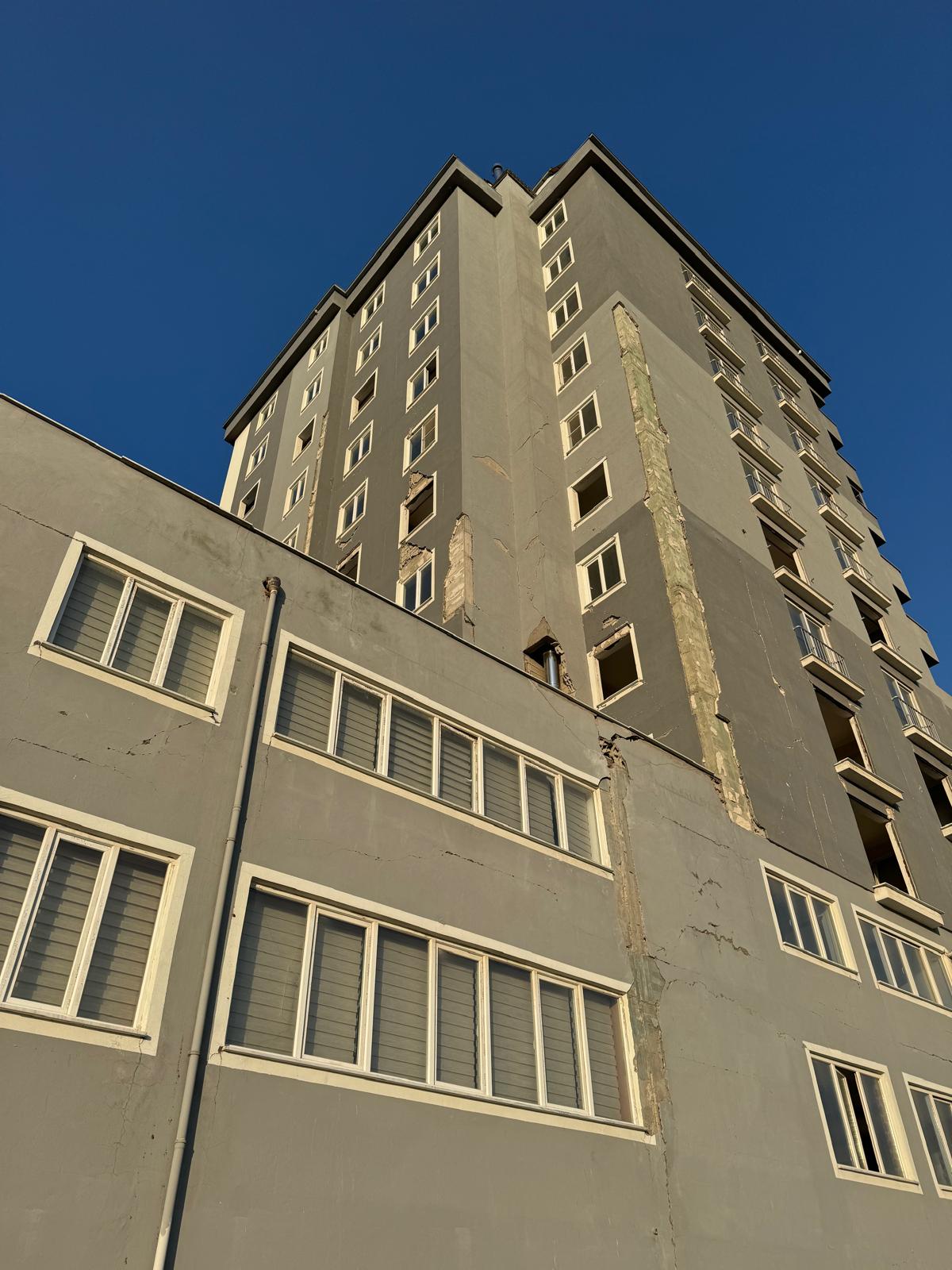
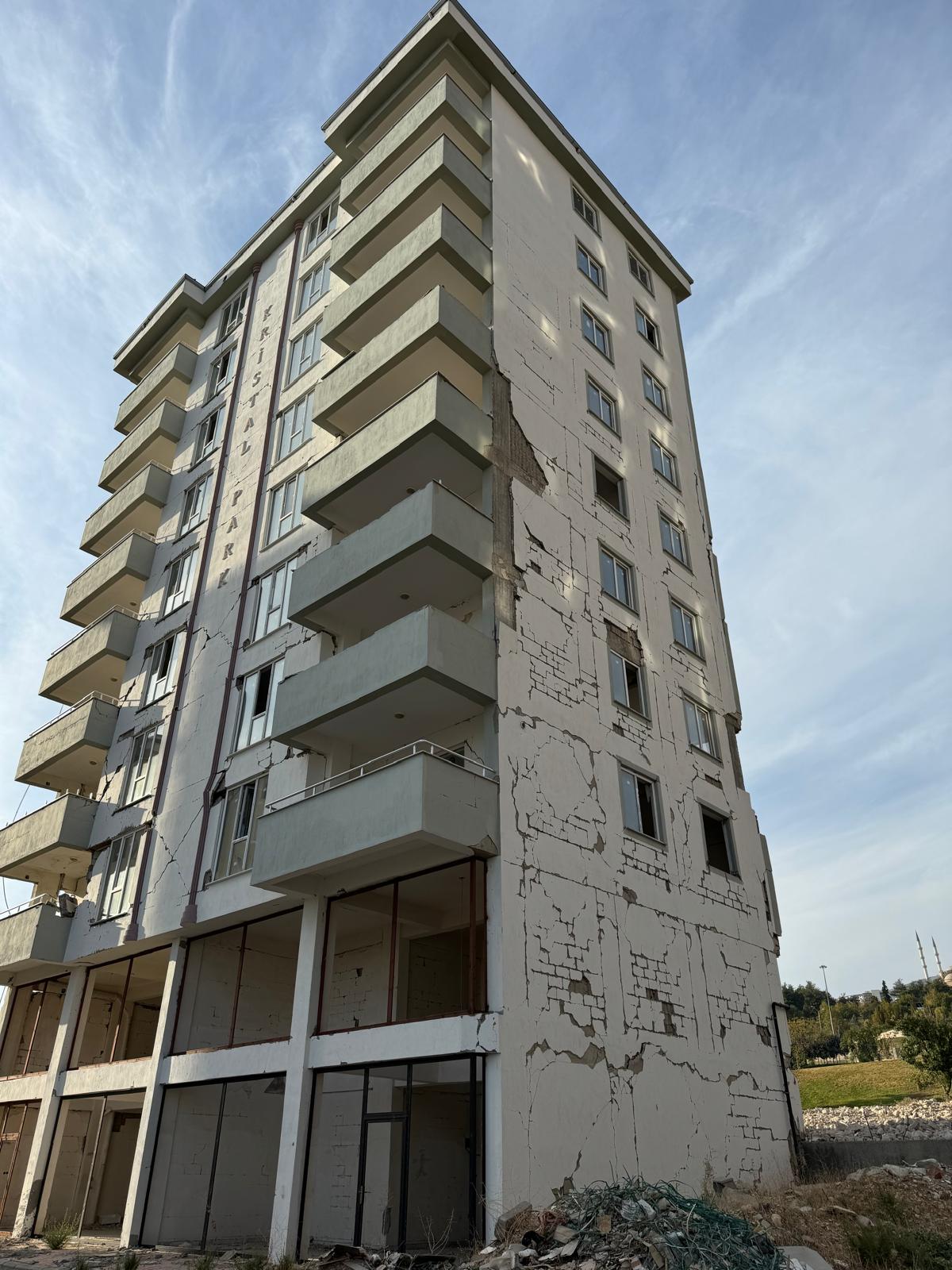
In Turkey, "urban transformation" became a tangible engineering practice after the 1999 and 2023 earthquakes, formalized under Law No. 6306 on the Transformation of Areas under Disaster Risk. Starting with a risky-building assessment report, the process spans evacuation, rent assistance, demolition, new design, permitting and turnkey construction — bringing law and engineering to the same table. Meva1 stands with the owner across every link of that chain; the team that prepares the technical report shares full responsibility with the team pouring concrete on site.
Highlights
Risky-building assessment report under Law No. 6306
Evacuation, rent assistance and ownership rights tracking
Demolition permits and municipal process management
Architectural and structural design of the new building
Turnkey construction and post-handover warranty
01
Scope
Preparation of the risky-building assessment report, upload to the Ministry of Environment and Urbanization system, management of objection processes, procurement of demolition permits, follow-up of rent assistance applications on behalf of rights holders, architectural and reinforced-concrete design of the new building, permitting, and turnkey completion of construction — all under a single contract and a single engineering team.
02
Legal and Financial Benefits
Law No. 6306 provides significant incentives — title-deed, notary, fee and stamp tax exemptions, low-interest transformation loans and monthly rent assistance. When the process is set up correctly, the rights holder is substantially relieved of financial burden and ends up with a modern, earthquake-resilient home. We align the financial plan with the engineering timeline.
03
Managing Co-owners
The process is as much human as it is technical. Co-owner meetings, majority decisions, dispute resolution and one-on-one communication with rights holders demand significant effort. Alongside our engineering team, Meva1 runs the human side of transformation through dedicated advisory.
04
Design Quality
Transformation is not only about a safer building; it is the opportunity to build a more livable one. Architecture, thermal insulation, acoustic comfort, parking solutions and energy efficiency of the new building are planned from the start. What rises in place of the risky structure is not a conventional block but a durable, contemporary building.
05
Post-handover Warranty
Structural and finishing warranties on completed turnkey buildings are served directly by our in-house team. Any engineering finding that surfaces after handover is resolved quickly through the same laboratory and site team.
The success of a construction project depends on a team that can manage the triangle of budget, schedule and quality with discipline. Acting as the owner's technical representative, Meva1 takes part at every stage — from feasibility through provisional acceptance. We run planning, resource allocation, risk management and quality control on PMI-aligned methodology, calibrated to Turkish field realities.
Highlights
Feasibility, schedule and risk analysis
Contract administration and progress payment control
Site engineering and daily reporting
Occupational health and safety oversight
Provisional and final acceptance processes
01
Service Scope
Preparation of tender documents, contractor selection, contract negotiation and administration, progress payment approval, schedule tracking, change orders, subcontractor coordination, material approvals and provisional acceptance — all under Meva1's consulting responsibility.
02
Consulting Philosophy
As the owner's technical representative we serve only the owner's interests. From design through handover we protect the rights of the building owner; we keep no commercial ties to the contractor. Independence is a prerequisite of consulting.
03
Risk Management
For each risk class — ground surprises, material price swings, weather, permitting delays, subcontractor insolvency — we build a quantitative risk matrix and prioritized action plans through a probability × impact heat map. The risk register is updated weekly.
04
Occupational Health & Safety
Sites are inspected daily; fall protection, PPE, crane operations and electrical safety are monitored under an independent oversight framework. Statutory HSE responsibility is owned and records are kept audit-ready.
05
Data and Reporting
Weekly progress reports, S-curve, earned value analysis, photo-evidence site reports and progress-payment summaries are delivered to the investor through a single dashboard. Every decision point is taken with the team and logged.
Turnkey Project Experience & Construction Contracting Services
Turnkey construction is a contracting model that takes the full coordination burden off the owner and consolidates responsibility — from architectural design through post-handover warranty — into a single contractor. Meva1 serves as the turnkey contractor on both our own developments and on investor-led projects. Because the supply chain, subcontractor pool and field crews are in-house, supply and workmanship quality stay constant for the duration of the contract.
Highlights
Coordination of architecture, structural, MEP and finishes
One contract — fixed price and schedule
In-house concrete pump and site crews
Direct control of the supply chain
Two-year structural-use warranty after handover
01
Single Point of Contact
Coordination gaps that may arise between the architect, structural engineer, MEP contractor, electrical contractor, finishing crews and material suppliers belong to the contractor, not the owner. A single contract shortens the investment timeline, reduces surprises and clarifies accountability.
02
Fixed Price — Fixed Schedule
After detailed design and unit-price analysis, we sign a fixed-price and fixed-schedule contract. Cost variances during the project are managed transparently through the contractual change procedure.
03
In-house Resources
The concrete pump, formwork crews, rebar crews, site engineers and our building materials laboratory are owned directly by the firm. This keeps third-party risk on critical items low while enabling single-source control of speed, quality and cost.
04
Quality Assurance
Before every pour, fresh concrete, aggregate and rebar samples are tested in our laboratory. Pours below target class are rejected. Before provisional acceptance, all finishing checks are run through a checklist and the punch list is closed during a joint site walk with the investor.
05
Post-handover Service
We provide a two-year structural-use warranty after turnkey handover. Any engineering finding during this period is resolved at no cost by the same site team. The user manual, maintenance schedule and technical document file are handed over on day one.
On-site transformation rebuilds risky structures on the same parcel without rights holders having to leave the location they call home. Neighborly relationships, local commerce and daily routines are preserved while the new structure is built to the latest seismic code and modern comfort standards. Meva1 runs the full process at the parcel level — from risky-building assessment through turnkey handover.
Highlights
Rapid transformation at the parcel level
Co-owner majority management
Temporary relocation support
A new, contemporary building in the same location
Full preservation of ownership rights
01
Process
Risk report → co-owner meeting → two-thirds majority decision → evacuation and rent assistance → demolition permit → new design → permits → construction → occupancy permit → handover. We stay alongside the rights holder at every step, with a single engineering team.
02
Social Dimension
On-site transformation is a neighborhood-preserving model. The shopkeeper keeps their customer, the child their school, the elderly their neighbor. This eases the decision and increases rights-holder participation.
03
Financial Framework
Within Law No. 6306, rent assistance, interest-supported credit and fee exemptions are used. New units are assigned per co-owner square-meter share; any additional requests are added to the contract through supplementary protocols.
04
Technical Quality
The new building is designed in accordance with the current TBDY 2018 seismic code and current energy efficiency standards. Concrete class, rebar quality and detail solutions are verified in our in-house laboratory.
Building condition assessment is the first step in producing tangible, measurable answers about whether a structure is safe. Visual inspection alone is not enough — the actual strength of the concrete, the diameter and spacing of the rebar, corrosion state, soil class and geometric irregularities must be evaluated together. All concrete, aggregate and rebar testing runs in our in-house building materials laboratory; turnaround drops from days to hours and the data chain stays under one team.
Highlights
Visual inspection and damage map
Concrete core samples (TS EN 12504-1)
Rebar detection via X-ray scanning
Soil class and soil profile assessment
Recommended strengthening strategy
01
Scope
Visual inspection, concrete core sampling, rebar detection (X-ray), corrosion assessment, geotechnical survey and reporting are gathered under a single service delivered by a single team. The owner receives a complete technical package: current as-built drawings, material testing, geotechnical data and the result report.
02
Our Own Laboratory
Cores are capped, broken and classified in our own building materials laboratory per TS EN 12390-3. With no third-party queue we can share preliminary findings the same day, enabling urgent intervention decisions without delay.
03
Damage Mapping
Cracks, rebar corrosion, concrete spalling, settlement traces and degradation at connection details are recorded on a photo-anchored damage map. The map both grounds the strengthening strategy and serves as a reference for future structural health monitoring.
04
Soil and Local Effects
The same building behaves entirely differently on different soil profiles under earthquake loading. Geotechnical boreholes, Vs30 measurement and soil class determination per Table 12.1 of TBDY 2018 are therefore part of the assessment at the parcel level.
05
Reporting
Result reports are prepared with code references for the engineering audience and with clean visuals and clear recommendations for the owner. The report explicitly states which scenario the building fits — "livable as is", "local repair", "strengthening" or "demolition and transformation".
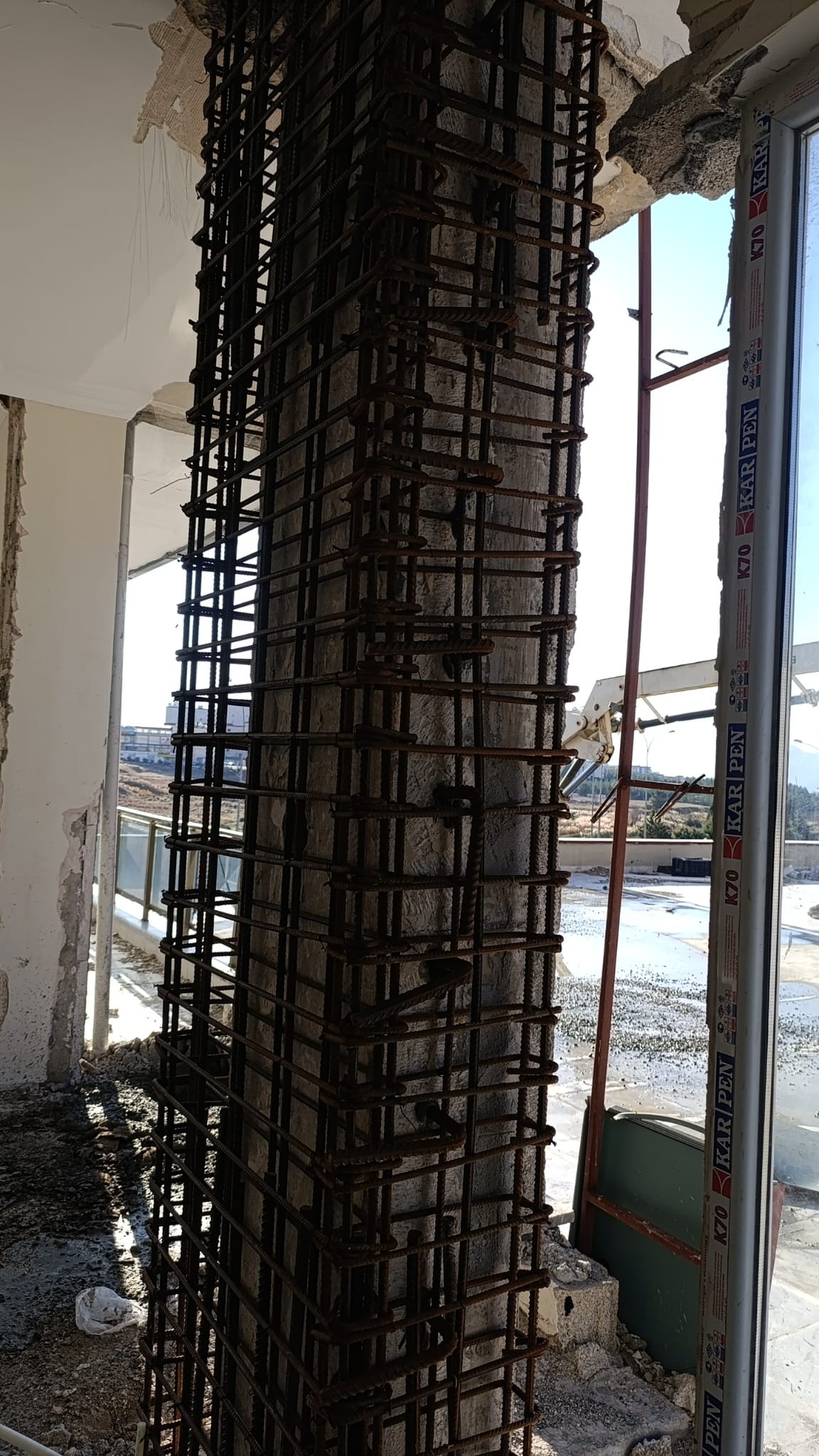
FRP (Fiber Reinforced Polymer) wrapping uses carbon, glass or aramid fibers to deliver a strengthening technique that is much lighter, faster and produces almost no cross-section loss compared to conventional reinforced-concrete or steel strengthening. When the right design and the right application meet, FRP brings high strength and ductility in a short time. Meva1 takes on FRP material selection, design and application end-to-end.
Highlights
Carbon, glass and aramid fiber options
Column, beam and slab applications
Negligible added weight, minimal cross-section loss
Corrosion-resistant and long-lived
Applicable without evacuating the building in most cases
01
Advantages
Compared to conventional jacketing, FRP adds almost no weight, causes virtually no cross-section loss and shortens application time significantly. The building is rarely taken out of service.
02
Design Discipline
FRP loses effectiveness when miscalculated. Anchorage lengths, number of wrap layers, fiber direction and epoxy resin selection are chosen against the target behavior of the reinforced-concrete element. Designs reference ACI 440 and applicable EN standards.
03
Application Process
Concrete surface preparation (rounded corners, removal of loose surface, moisture control), resin primer, fiber placement, saturation resin and a protective topcoat are applied in sequence and logged. Each step is archived through photographic evidence.
04
Quality Control
Post-application pull-off tests and visual inspection verify bond quality. Areas judged insufficient are reinforced with additional wrap layers.
Seismic analysis is the scientific assessment of how an existing building will behave under the design earthquake (10% probability of exceedance in 50 years — a 475-year return period). The process begins with observational assessment, continues with the collection of material and geometric data, the construction of a three-dimensional finite element model, and the comparison of element capacities against code requirements. The outcome forms the basis for repair, strengthening or demolition decisions.
Highlights
Performance calculation compliant with TBDY 2018
Concrete coring + X-ray rebar detection
Boreholes + geophysical soil survey
3D finite element model in İdeCAD
475-year seismic performance report
01
Observational Assessment
Approved architectural and reinforced-concrete drawings are obtained, verified one-to-one on site, and the existing condition is transferred into AutoCAD. Where the as-built differs from the drawings, formwork plans are redrawn floor by floor and the as-built survey becomes input to the analysis.
02
Conformity Check Against the Structural Drawings
Around 5% of vertical load-bearing elements are checked with X-ray equipment. Rebar diameters and spacings are identified, and column reinforcement is exposed locally to inspect for corrosion. All data is consolidated in tables and the realization factor of the rebar relative to the original design is determined.
03
Determination of Concrete Strength
In line with the Turkish Seismic Code, at least three core samples are taken from each floor. The samples are capped and tested in our own laboratory and the concrete class is determined. With no third-party queue, preliminary results are available the same day; the openings are sealed with high-strength repair mortar.
04
Geotechnical Survey
For the soil class — critical to the determination of seismic forces — a 20 m borehole, Vs30 (shear wave velocity) measurement, electrical resistivity tomography and seismic refraction methods are applied. Local soil class is determined per Table 12.1 of TBDY 2018; liquefaction risk, if any, is reported separately.
05
Structural Modeling
All geometric data and material parameters are entered into the İdeCAD structural analysis software. A 3D model is built using the finite element method. Capacity checks are run under dead load, live load and earthquake loading in the X and Y directions; modal analysis, equivalent seismic load and pushover analysis are applied where needed.
06
Conclusion and Report
Elements that exceed capacity, behave in a brittle manner or are damaged are identified in detail. The structure's performance level under the 475-year earthquake is reported, with strengthening recommendations provided where required. The report is prepared with code references for the engineering audience and with clean visuals for the owner.
Process
Stages of seismic analysis
01
Old and new project drawings of the existing building are obtained and reviewed in full.
02
Damage observed in the structure (cracks, rebar corrosion, settlement) is identified.
03
Concrete cores are taken from the load-bearing system and tested in the laboratory to determine strength class.
04
Rebar diameters, counts and spacing in the building are detected with X-ray scanning equipment.
05
Corrosion in the rebar and cross-section loss are identified.
06
The existing foundation system of the building is identified.
07
A geotechnical survey report (boreholes plus geophysics) is prepared for the building parcel.
08
The load-bearing system is modeled in 3D and the seismic performance calculation is run.
09
A structural performance analysis report is produced based on the full body of work.
At Meva1 Engineering's in-house building materials laboratory we run standardized tests on concrete cores, aggregates, reinforcing steel and soil samples to TS EN standards. Without queueing for third-party labs, we report results from our own sites quickly, feeding our seismic analysis, strengthening and condition-assessment workflows with first-party data. We also deliver testing and reporting services to external clients.
Highlights
Concrete core and fresh concrete testing
Aggregate grading, freeze-thaw and abrasion
Rebar tensile and bend tests
Soil classification and mechanical testing
Same-day preliminary findings
01
Concrete Testing
On hardened concrete we run compressive strength (TS EN 12390-3), splitting tensile (TS EN 12390-6) and density tests. Cores are capped, broken and reported; the concrete class of existing buildings is verified through this chain. On fresh concrete we run slump, air content and density tests.
02
Aggregate & Mortar
Particle size distribution (TS EN 933-1), washable fines, freeze–thaw and abrasion tests qualify the aggregate used in pours. Bond and strength tests are run on plaster, screed and repair mortars; non-conforming supply batches are not accepted on site.
03
Rebar & Steel
Tensile strength, yield, elongation and bend tests on reinforcing steel and strand samples are carried out per TS 708 and the relevant EN standards. The supplied rebar is documented as meeting the project class.
04
Soil Samples
Disturbed and undisturbed samples from boreholes are run through sieve analysis, Atterberg limits, unconfined compression and consolidation tests. Results feed seismic analysis and foundation design directly.
05
Data Chain Advantage
Because all testing is in-house, sample transport losses are minimized, turnaround drops from days to hours and the data chain remains under one engineering team. Reporting becomes more reliable and decisions get made faster.
The safety of your building is the security of your future
Get in touch to assess your building's seismic performance, to begin your urban transformation process, or to run sample testing at our own building materials laboratory.
This site uses only strictly necessary cookies — to remember your language preference and consent. No marketing, analytics, or third-party tracking cookies.